An essay by Rron Thaci, The Business of…
The Business of the Line
Why some brands make you wait, and what they’re actually getting out of it.
Substack version4 min readPublished Oct 2026
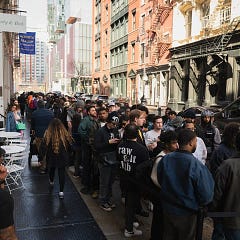
There’s something funny about walking past a store with a line outside.
You might have had no interest in going in. You might not even recognize the brand. But seeing twenty people waiting outside is usually enough to make you look twice.
What’s going on in there? Is something being released? Is it really that good?
And just like that, a business you’ve never thought about has your attention.
We’ve spent years making shopping more convenient. Online checkout, same-day delivery, mobile ordering. Most businesses want to remove every possible reason someone might abandon a purchase.
Yet some of the most desirable brands still have customers waiting around the block.
Sometimes that’s a problem. Other times, the line is doing exactly what the brand wants.
The Crowd Is Validation
A line makes demand visible in a way traditional advertising can’t quite replicate.
Someone sees a crowd outside a store. Later, they notice a celebrity wearing the brand. Then it appears on their Instagram feed, or a friend mentions it in conversation.
By the time they actually consider buying something, the brand is already familiar.
That first encounter might have lasted only a few seconds, but it contributed to a much larger impression.
It’s part of why queues have become so closely associated with streetwear and limited product releases. Brands like Supreme built entire retail rituals around specific release days, where showing up was part of participating in the brand.
The products mattered, of course. But so did the anticipation, the community, and the fact that not everyone could get what they wanted.
A line can become a recognizable part of a brand’s identity, rather than simply something that happens outside its store.
When Does a Line Make Sense?
I think there are three situations where a queue can be particularly valuable.
For a new brand, it can create discovery. A store opening or limited collaboration gives people a reason to show up at the same time. The resulting crowd can introduce the brand to people who otherwise wouldn’t have noticed it.
For an established brand, it can reinforce demand. A line outside a well-known store is a public reminder that people still care. For brands whose appeal depends partly on cultural relevance, that visibility can be worth more than the transactions happening inside.
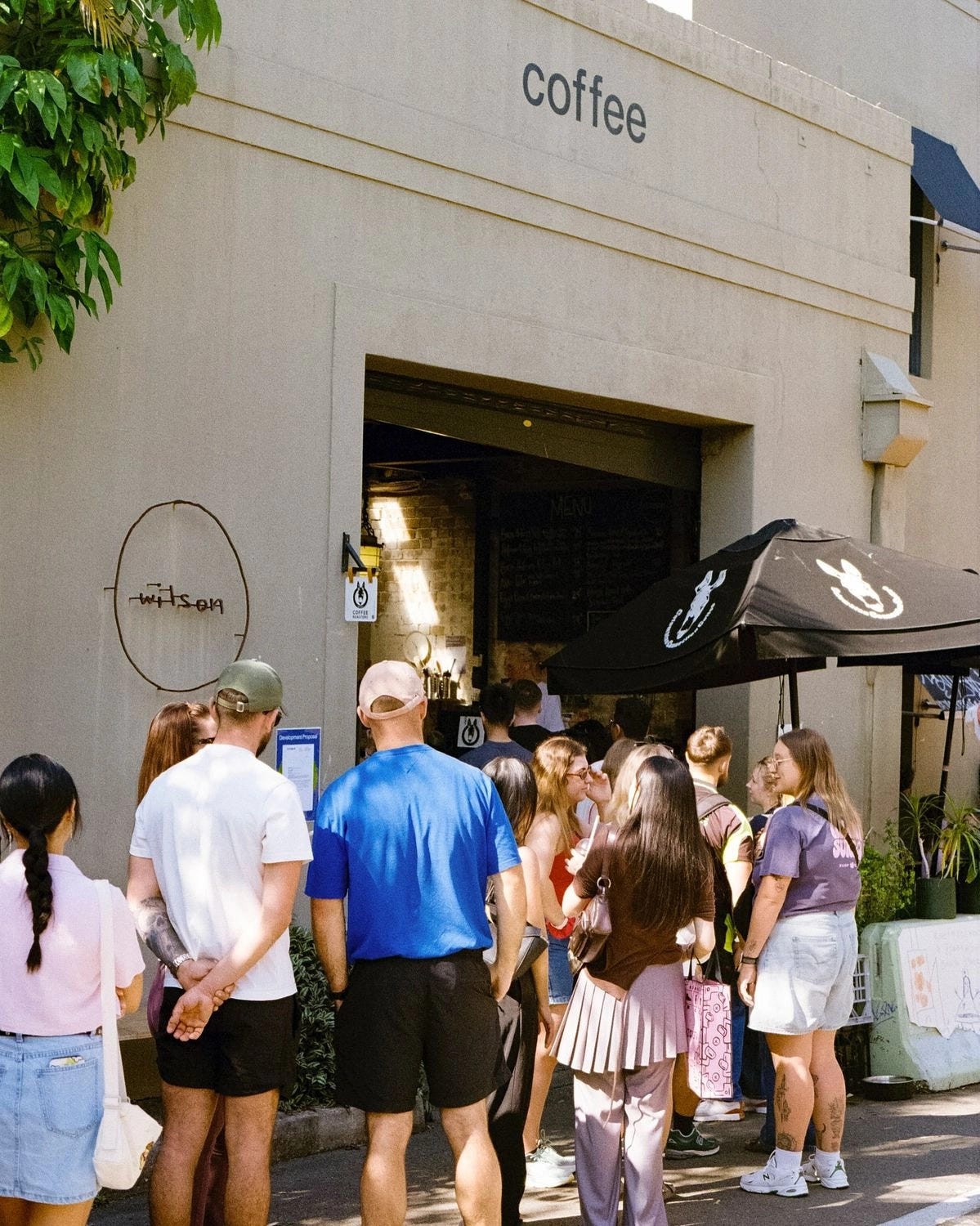
For an experience-led business, waiting can become part of the occasion. A popular coffee shop releasing a limited drink, a sample sale, or a special retail event can turn an otherwise ordinary purchase into something people plan around.
There are different economics behind each.
A new brand is trying to acquire attention. An established brand is maintaining desirability. An experience-led business is creating an occasion worth visiting.
The mistake is assuming the same approach works for all three.
A new business can’t manufacture lasting demand simply by limiting availability. Scarcity works best when people already have a reason to want what’s being offered.
And a coffee shop whose regular customers wait twenty minutes every morning because the register is understaffed isn’t building its brand. It’s testing their patience.
Scarcity Isn’t Free
There’s a reason limited releases can be so effective.
People generally place more value on opportunities they believe might disappear. Waiting also requires a commitment of time, which can make the eventual purchase feel more meaningful.
But restricted access has a cost.
A brand selling one hundred units instead of five hundred is giving up potential revenue today. That might be a reasonable decision if a smaller release strengthens demand for future products.
It’s a much weaker decision if those four hundred missed sales go to competitors or customers simply lose interest.
The same is true of the queue itself.
Long waits can create excitement around an occasional launch. Make every purchase unnecessarily difficult, and eventually even loyal customers may decide the experience isn’t worth it.
It’s not whether scarcity creates demand. It’s whether the demand created is worth more than the sales and goodwill the business gives up.
What Happens After the Line?
A photo of a crowd outside a store looks great. But it’s not much of a trackable metric, depending on who you ask.
The more useful questions come afterward.
Did the event introduce new customers? Did those people return? Did the brand gain recognition outside its existing audience? And were customers satisfied enough with the experience to do it again?
A clothing brand might happily sacrifice some immediate sales if a limited release creates attention that supports its next collection.
A coffee shop might justify a busy collaboration weekend if the event brings in customers who become regulars.
But if the line disappears and nothing changes afterward, the business may have created a moment rather than lasting demand.
That’s not necessarily a failure. Brand-building efforts don’t always produce immediate, measurable returns.
It does mean the crowd itself shouldn’t be mistaken for the return.
A line can introduce a brand, reinforce its desirability, or turn a purchase into an experience. The business value depends on what survives once the sidewalk is empty.
And for most businesses, that’s a much more useful thing to measure than how many people were willing to wait.
Share
Next essay